
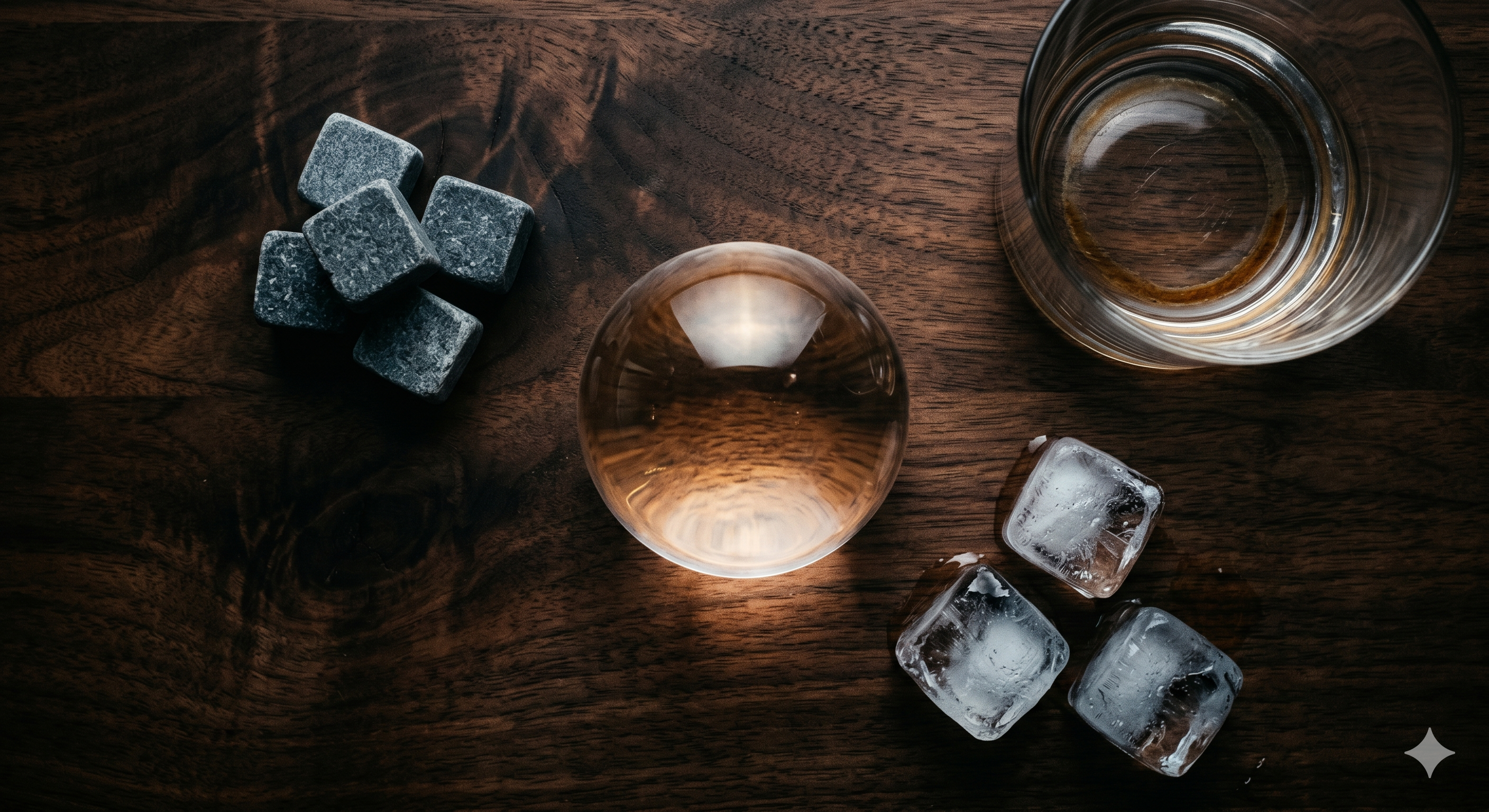
Someone gave you whiskey stones and you have not touched them since.
You are not alone. Millions of those little soapstone cubes sit in kitchen drawers across the country, victims of a gifting trend that sounded smart on paper but never quite delivered in practice. The argument seemed solid: chill your whiskey without diluting it. The physics, unfortunately, had other plans.
This post settles the debate properly. By the end, you will know exactly why temperature matters in the first place, what each chilling method actually does to your drink, which option earns its place in a serious glass, and which whiskey types respond to cold differently. No bar-stool posturing. Just the honest answer.
Why Temperature Changes What You Taste in Whiskey
Temperature is not a cosmetic detail — it is a flavour control mechanism that shapes everything you experience in the glass.
Whiskey served too warm lets alcohol vapours dominate before the actual aromas reach your nose. Serve it too cold and the volatile compounds responsible for fruit, spice, and finish essentially shut down. The widely accepted sweet spot among distillers and serious drinkers sits between 60 and 65 degrees Fahrenheit — cool enough to tame heat, warm enough to let the spirit express itself fully.
Every chilling method either helps you hit that range, misses it, or actively works against it. That is the only lens that matters here.
The choice of glassware compounds the effect. A heavy, thick-based lead-free crystal rocks glass holds temperature more consistently than a thin-walled tumbler, which bleeds warmth in from your hand almost immediately. If you want to understand what a whiskey decanter actually does for the experience — and why the vessel matters as much as what is inside it — that piece covers the full picture.
Regular Ice: Honest, Effective, and Often Underrated
Regular ice is the option serious drinkers reluctantly admit they use — and the one that genuinely does its job when applied correctly.

Standard cubed ice from a home freezer chills a pour efficiently, bringing it from room temperature toward the ideal range within 60 to 90 seconds. For cocktails, highballs, or anything mixed, it is not just acceptable — it is correct.
The Dilution Problem Is Real, But It Is Also Manageable
The genuine drawback of regular ice is melt rate. Standard cubed ice is typically made from tap water with air trapped inside, which increases surface area and accelerates melting. Pour two fingers of bourbon over four standard cubes and by the halfway point, dilution is working against you whether you intended that or not.
A small amount of dilution is not automatically the enemy. Master distillers add distilled water to cask-strength spirits before bottling precisely because water can open certain esters and soften heat at barrel proof. The issue is uncontrolled, compounding dilution — the kind that turns a carefully chosen pour into something that tastes like it is searching for its original identity.
When Regular Ice Is the Right Call
For cocktails, regular ice is the correct tool. When building an Old Fashioned, a Whiskey Sour, or a Highball, dilution is part of the recipe rather than a failure of it. The rapid chill is an asset in those contexts, not a liability. The only mistake is using regular cubed ice for a premium neat pour where controlled temperature matters.
Whiskey Stones: The Gift That Physics Would Not Cooperate With
Whiskey stones peaked as a gifting trend around 2012 and have been in steady decline since. Search interest in "whiskey stones" has been falling for several years in a row — a trajectory that mirrors the enthusiast community's verdict on their actual performance.

The concept is appealing: small cubes or spheres of soapstone or stainless steel, pre-frozen for several hours, dropped into your glass to chill without any dilution. The problem is in the thermodynamics.
Why Whiskey Stones Underperform: The Science
Ice chills effectively because of a property called latent heat of fusion. As ice melts, it absorbs a significant amount of thermal energy during its phase change from solid to liquid — approximately 334 joules per gram. That phase-change energy is what makes ice such a powerful chilling medium. It is not simply cold; it actively consumes heat as it transforms.
Soapstone and stainless steel have no phase change. Once the stored cold has transferred into the liquid, their chilling capacity is spent. Published testing has consistently found that whiskey stones drop a 2 oz pour by roughly 10 to 15 degrees Fahrenheit before they are done — compared to ice, which continues absorbing heat until fully melted. Gear Patrol concluded plainly that whiskey stones are ineffective at meaningful chilling, a finding consistent with what whiskey communities have been reporting for years.
This is part of the broader question of what actually makes a good whiskey decanter and good barware — the physics of materials matter as much as the aesthetics.
The One Scenario Where Stones Are Not Useless
If your whiskey is already stored at the correct temperature — a 60 to 65 degree environment away from direct heat and light — a stone or two can maintain that temperature in the glass without dropping it further. In that specific situation, stones cause no harm. The problem is most home environments run warmer than that, which means stones frequently lack the cooling capacity to reach the target range at all.
If someone gave you a set as a gift, appreciate the thought. They are not going to ruin a drink. But there are better tools for the job, and the market data makes clear that serious drinkers have already reached that conclusion.
Big Ice: Why Size Changes Everything
Big ice has become the standard among whiskey enthusiasts, and the reasons are grounded in physics rather than aesthetics — though the aesthetics matter here too, and that is worth addressing directly.
"Big ice" typically means a 2-inch sphere or a 2-inch cube, produced using silicone molds available for under $15. Most home freezers produce them in 18 to 24 hours.
The Surface Area Principle
The key variable is surface area relative to volume. A large sphere has dramatically less surface area exposed to liquid than the same volume broken into smaller cubes. Less surface area means a slower melt rate. A 2-inch sphere melts at roughly one-fifth the rate of an equivalent volume of standard ice cubes. That difference translates directly into controlled, intentional dilution across the full drink — rather than the rapid, compounding dilution that undermines a pour within the first few minutes.
Sphere vs. Cube: Which One to Choose
Both formats deliver the same core benefit. The sphere is mathematically optimal because it minimises surface area for any given volume. The cube is easier to produce consistently at home, fits cleanly in most rocks glasses, and has a compositional confidence that many enthusiasts prefer visually. The performance difference between the two is real but modest — choose whichever fits your glass and your setup better.
Clear Ice vs. Cloudy Ice
Commercial big ice is optically clear; home freezer ice is usually cloudy. The cloudiness comes from dissolved minerals and trapped air freezing at inconsistent rates. Directional freezing — used in insulated clear ice molds that freeze from the top down — forces mineral content and air bubbles to the last section to freeze, which is then removed. The result is denser, slower-melting ice that looks substantially more composed in a glass.
For everyday bourbon and rye, the flavour difference between clear and standard ice is marginal. For a high-quality single malt, using filtered or distilled water in your mold removes the mineral variable entirely and is worth the minimal extra effort.
A single 2-inch cube sitting in the base of a heavy lead-free crystal rocks glass, amber spirit resting above it — that presentation is not merely decorative. Research in consumer psychology consistently shows that presentation directly influences perceived quality and how flavour registers. The glass, the ice, the pour from a proper vessel: all of it contributes to the experience before the first sip reaches the palate.
What Goes Best With Each Whiskey Type
Not every whiskey responds to chilling in the same way, which makes a universal answer impossible to defend honestly.
Bourbon (especially 90 to 120 proof): Benefits from a single large cube or a small addition of still water. High-proof bourbon can be aggressive at room temperature; controlled chilling tames the heat without flattening the caramel and vanilla notes that define the category.
Rye whiskey: Handles dilution well. The characteristic spice and grain notes hold their structure under moderate chilling. Big ice suits rye well across most contexts.
Blended Scotch: Forgiving and versatile. Works with big ice, particularly in longer pours or mixed drinks. For a considered neat pour, room temperature or slightly below is typically ideal.
Single malt Scotch (particularly Lowland and Highland expressions): This is where the ice debate sharpens. The floral, fruity, and coastal notes that define these whiskies are fragile and close down noticeably under significant cold. Many experienced drinkers skip ice entirely with premium single malts, using a pipette of still water instead. If you do use ice, one large cube allowed to rest briefly in the glass before the first sip is the appropriate middle ground.
Japanese whisky: The Japanese highball tradition is built around ice — large, perfectly clear cubes are the commercial standard. For premium expressions drunk neat, room temperature or a single large cube is appropriate.
Irish whiskey: Approachable and adaptable. Big ice or regular ice depending on context. The typically lighter, triple-distilled character holds up well to moderate dilution.
The Ritual Argument, Which Is Not Only About Aesthetics
A clear 2-inch cube in a heavy crystal glass is not just pleasing to look at. The act of preparing it, making a considered pour, watching the spirit settle against the ice, holding a glass with real weight — these are functional components of the ritual, not decorative extras.
Behavioural psychology research consistently shows that presentation shapes taste perception. Subjects in sensory studies rate identical drinks differently based on the quality of the vessel, the weight of the glass, and the care apparent in the pour. The ritual is load-bearing. The decanter on the bar cart is not storage. The heavy glass is not vanity. The big, clear cube is not performance. Each element signals intentionality, and intentionality is what makes a pour feel like a moment rather than just a drink.
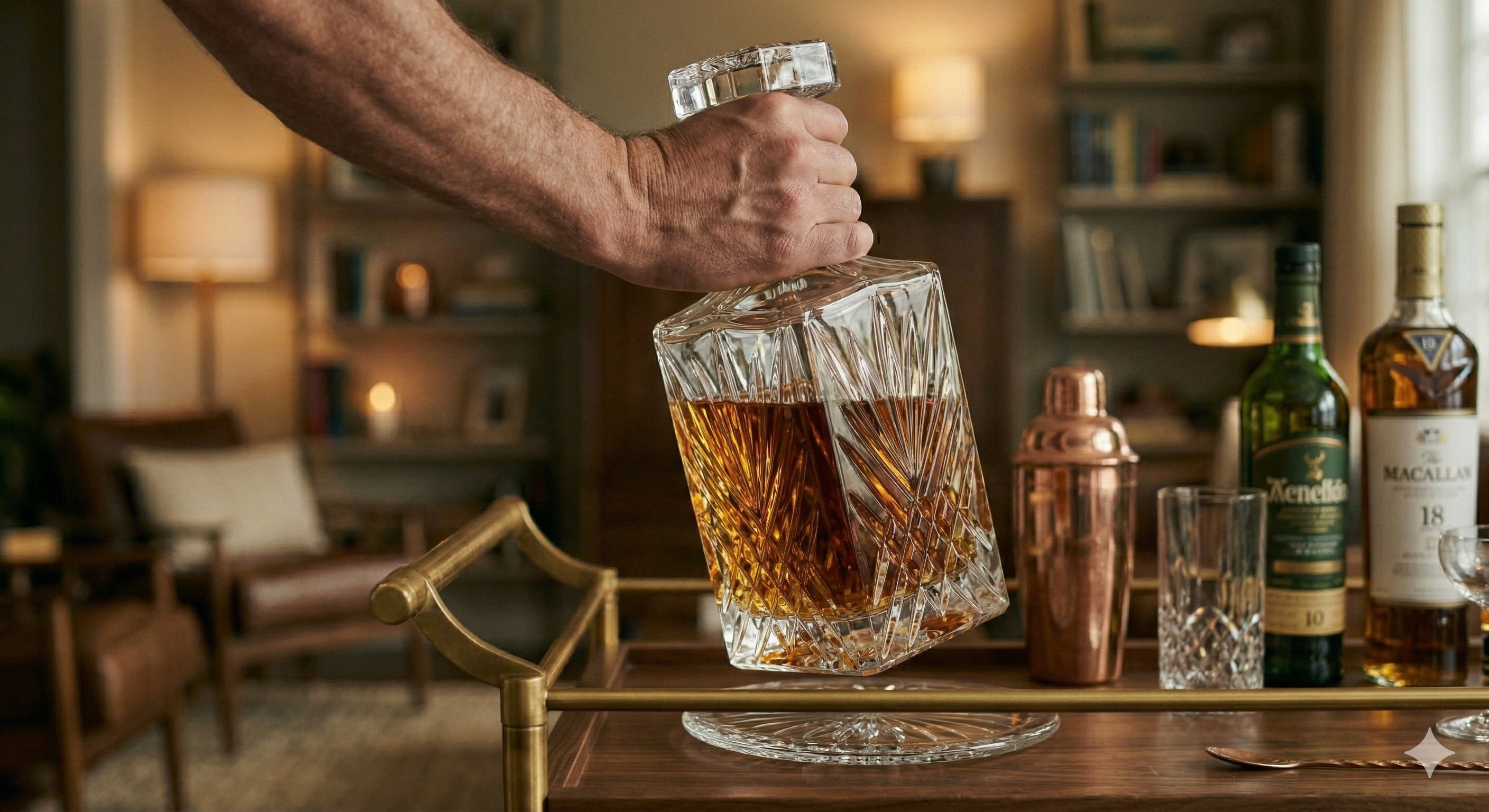
There are seven specific ways a whiskey decanter changes the experience — from bar cart centrepiece to infinity bottle to guest service — that are worth reading if you are building the full ritual setup.
If you are at the stage of caring about what goes in your glass, the vessel you pour from deserves the same consideration. The Hydro Gizmos luxury decanter collection is built for exactly this context — lead-free crystal, serious weight, and an airtight stopper that earns its place in the setup.
How to Choose: A Practical Comparison
|
Method |
Chill Rate |
Dilution |
Best For |
Verdict |
|
Regular ice (cubed) |
Fast |
High (rapid, uncontrolled) |
Cocktails, highballs, casual pours |
Correct tool for mixed drinks |
|
Whiskey stones |
Weak |
None |
Maintaining near-ideal temperature only |
Largely ineffective for serious chilling |
|
Big ice (2-inch cube or sphere) |
Moderate |
Low (slow, controlled) |
Neat pours, premium expressions, sipping whiskeys |
Best all-round option |
|
No ice, water drops only |
None |
Minimal, controlled |
Premium single malts, cask-strength expressions |
Method preferred by distillers |
If you are weighing up barware decisions more broadly, the cheap vs premium whiskey decanter breakdown covers exactly why material quality compounds across every part of the ritual — glass, stopper, weight, and what each signals about what is inside.
Frequently Asked Questions
Do whiskey stones actually work?
Whiskey stones provide limited cooling compared to ice. Without a phase change, they drop a pour by roughly 10 to 15 degrees Fahrenheit before their chilling capacity is spent. Ice continuously absorbs heat as it melts due to latent heat of fusion, making it far more effective. Whiskey stones do not harm a drink, but for meaningful chilling they are largely ineffective.
Is big ice better for whiskey?
Big ice is the most practical option for neat whiskey pours. Its low surface area to volume ratio slows the melt rate significantly compared to standard cubed ice, giving you controlled dilution rather than rapid, compounding dilution. A 2-inch cube or sphere maintains its form long enough to chill the glass appropriately without overwhelming the pour with meltwater.
Does ice ruin the flavor of whiskey?
Ice does not ruin whiskey — the wrong ice used carelessly can undermine it. Rapid melting from small cubed ice produces uncontrolled dilution that strips a pour of character before you finish the glass. Big ice, used in appropriate quantities, delivers measured chilling that most high-proof expressions actually benefit from. The key is controlling how much water enters the drink and at what rate.
What is the best way to drink whiskey?
The best method depends on the whiskey and the context. For premium single malts and high-proof expressions, room temperature with a few drops of still water is the choice of most distillers. For bourbon and rye, a single large ice cube is practical and flavour-appropriate. Cocktails call for regular ice without hesitation. Intentionality matters more than any single rule.
Most whiskey debates have a correct answer underneath the noise. On this one, the answer is: big ice for serious pours, regular ice for cocktails, and a well-deserved retirement for the stones in the drawer.
Temperature is not a minor detail. Get it right and the whiskey you already own tastes better. Get it wrong and no bottle quality or glassware can fully compensate. The upgrade costs $15 and a silicone mold.
The pour, the glass, the ice, the vessel it came from — these things compound. If the experience matters to you, build the full ritual properly.
Explore the Hydro Gizmos decanter collection — lead-free crystal, built for this exact moment.


Share:
How to Clean a Whiskey Decanter Properly (Without Ruining It)
Father's Day Whiskey Gift That Gets a Genuine Reaction (Not a Polite One)