
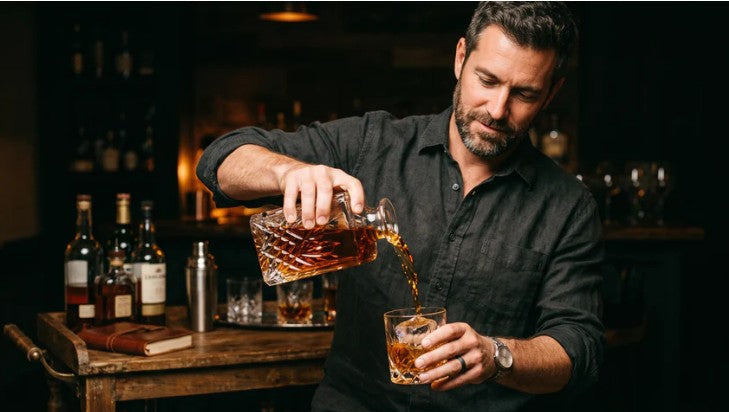
Most unwanted whiskey doesn't get poured out. It gets put in a cabinet, left there for six months, moved when you rearrange, and eventually considered again with the same conclusion: still not drinking that.
If you received a bottle as a gift this Father's Day that isn't quite right for your palate, you are in good company. A significant portion of whiskey that changes hands at gift-giving occasions sits unopened or barely touched because the style doesn't match the recipient's taste.
The instinct to let it sit is understandable. You don't want to waste it, you don't want to be ungrateful, and pouring it out feels like the worst option.
The answer almost nobody mentions, and the one that actually converts a bottle you'll never drink into something you'll actually use, involves a decanter and a concept called an infinity bottle. Before getting there, here are all five practical options in order of usefulness.
|
TL;DR Five practical options for whiskey you don't enjoy: use it in cocktails where the spirit is diluted by other flavours; cook with it where heat changes its character; serve it to guests blind (they may love it); blend it into an infinity bottle where it becomes a component rather than the star; or regift it with honesty. The infinity bottle method, using a quality decanter as your blending vessel, is the one option that turns a bottle you don't want into something genuinely worth drinking over time. |
Why Whiskey You Receive Doesn't Always Match What You Drink
Whiskey gifting has a structural mismatch problem. The giver typically buys what looks impressive, what is well-reviewed, or what is prominently placed in a gift guide. The recipient drinks what they actually enjoy, which may be a completely different style.

A bourbon drinker who receives a heavily peated Islay Scotch, or a Scotch drinker handed a high-rye American straight, is genuinely encountering a different flavour world, not necessarily a worse one, but an unfamiliar one.
The bottle isn't inferior. The fit is off. That distinction matters because it changes what you do next: the goal is not to force yourself to drink something you don't enjoy, but to find a use that either transforms it, depletes it pleasantly, or redirects it toward someone who will appreciate it.
Option 1: Use It in Cocktails Where the Spirit Is One Ingredient Among Several
Whiskey you find too smoky, too sharp, or too heavy on its own frequently works well as the spirit base in a cocktail where its character is modulated by other ingredients. An Old Fashioned with heavily peated Scotch tastes dramatically different from one made with bourbon, but it is a coherent drink.
A Scotch and ginger highball uses dilution and carbonation to soften intensity. A Whiskey Sour uses citrus to cut through richness or smokiness.
The practical rule: use the bottle in recipes where the whiskey is one voice among several rather than the unaccompanied lead. Most cocktail formats that include bitters, citrus, or a sweetener will be tolerant of a spirit style you wouldn't drink neat.
Does the Style of Whiskey Actually Matter for Cocktails?
Yes, but less than people assume. Heavily peated Scotch makes a distinctive Old Fashioned; it is not a drop-in substitute for bourbon. The key is matching the cocktail to the spirit's dominant character rather than pretending the character isn't there. Smoke works in cocktails built around bitters and sweetness. High-rye sharpness works in cocktails with citrus. Knowing what the whiskey is rather than ignoring it is what turns the mismatch into a useful ingredient.
Option 2: Cook With It
Heat transforms whiskey. The alcohol cooks off, the smoke diminishes, and what remains is flavour complexity without the intensity that may have been off-putting when drinking it neat. Whiskey appears in marinades for red meat, pan sauces for pork and chicken, barbecue sauces, caramelised onions, and desserts from whiskey cake to a whiskey-spiked caramel.
Is It Okay to Cook With Whiskey You Wouldn't Drink?
The general culinary principle is that you should cook with wine or spirits you'd at least tolerate drinking, because cooking concentrates rather than eliminates flaws. A whiskey that tastes actively unpleasant when drunk neat may produce an unpleasant sauce. However, a whiskey that simply isn't to your taste, too smoky, too bitter, too sharp, but isn't flawed in a technical sense, typically cooks well. Use the bottle in recipes where the spirit is a supporting flavour, not the centrepiece, and taste as you go.
Option 3: Serve It to Guests Without Leading With the Label
Taste is specific to the individual. A bottle of heavily peated Scotch that sits untouched in your cabinet may be exactly what a guest at your next gathering would choose if it were their personal bottle. The decanter solves a specific social problem here: it removes the label from the equation.

When whiskey is served from a quality decanter rather than its original bottle, guests encounter the liquid without the brand expectation or style preconception that comes from reading a label. Research into blind tasting consistently shows that people evaluate spirits differently when the label is removed. A whiskey that doesn't match your preference may be received with genuine enthusiasm by someone whose palate is calibrated differently. The decanter collection at Hydro Gizmos includes lead-free crystal options specifically suited to this kind of everyday hosting use.
Option 4: Blend It Into an Infinity Bottle
The infinity bottle is the option most people haven't encountered and the one with the most transformative result. An infinity bottle is a single decanter into which you pour the last one or two ounces of each bottle you finish, creating a continuously evolving personal blend.
The concept, documented extensively in Reddit whiskey communities and tracked by enthusiasts over years, produces a blend that no distillery could replicate because it is built from your specific history of bottles.
The key insight for handling whiskey you don't enjoy: the infinity bottle method works specifically well for spirits whose character is too strong on its own. A whiskey that is too peaty, too tannic, or too intense in a specific way becomes a contributing flavour rather than the dominant one when blended with three, five, or ten other whiskeys. Reddit users who have maintained infinity bottles for four or more years consistently report that contributions from whiskeys they didn't enjoy individually produced interesting complexity in the blend precisely because of their outlier character.
How Do You Start an Infinity Bottle With Whiskey You Don't Like?
Start with a clean decanter, not one with whiskey already in it. Pour two to four ounces of a balanced whiskey you do enjoy as the base. Add one to two ounces of the bottle you'd like to use up. Taste the blend after the first addition before continuing.
The community-developed guideline is to add whiskeys you'd at least tolerate as components, rather than ones with genuine quality flaws (contamination, off-notes from poor storage). Style mismatch, too smoky, too sharp, wrong region, is not a quality flaw and works well as a component.
For a full introduction to the infinity bottle method, the guide on how the infinity bottle works covers the technique in detail. The whiskey decanter sets in lead-free crystal are the vessel that serves this purpose best: wide enough to pour into without a funnel, substantial enough to display, and sealed well enough for practical use over weeks or months.
Can You Blend Different Whiskey Styles Together?
Yes, and the results are often more interesting than keeping styles separate. Bourbon and Scotch blend readily. Rye adds spice to blends that lean sweet. A heavily peated Scotch, added at a one-to-four ratio into a bourbon-forward blend, contributes a smoke note that reads as complexity rather than dominance. The blending community's primary rule is proportion: unusual or strong-character whiskeys work as supporting contributors, not as half the bottle.
Option 5: Regift It Honestly
Regifting whiskey is entirely acceptable when done with transparency. "This was a gift to me, it's not my preferred style, but I thought of you because you've mentioned enjoying this region/type" is a genuine and considerate act. It moves a bottle toward someone who will appreciate it, it is honest about the provenance, and it costs nothing.
The one regifting rule worth following: do not present a partially-consumed bottle as a primary gift. If you've opened the bottle and it is now two-thirds full, use it in one of the four previous options rather than presenting it as a new gift to someone else.
The Bottle Doesn't Have to Sit There
Whiskey you received but won't drink on its own has five legitimate exits, and the most permanent solution is also the most creative one. The infinity bottle method converts a bottle that would otherwise sit in a cabinet for three years into the foundation of something genuinely yours: a blend built from your actual drinking history, including the contributions from bottles that didn't fit.
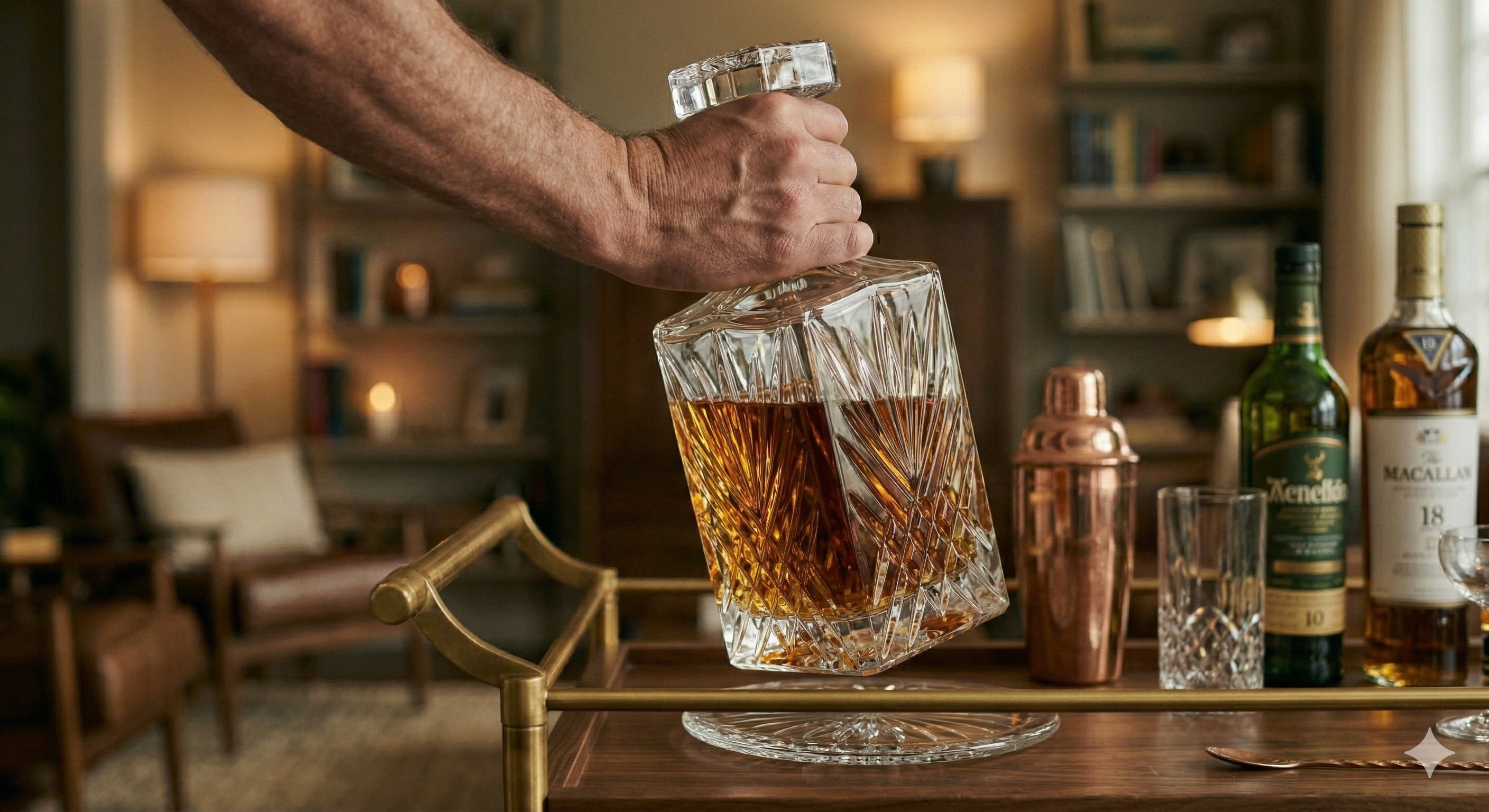
The decanter is what makes the method visible and intentional rather than just practical. A quality vessel on a bar cart is the right container for a living blend, a display piece that also happens to be a work in progress.
Browse lead-free crystal decanter sets for the vessel that starts your infinity bottle, and read the full guide on how the infinity bottle works before your first pour.

Share:
The Luxury Whiskey Decanter: What Separates Premium from Pretend
The Twisted Decanter: A Design That Confuses Buyers (Until You See It in Person)