
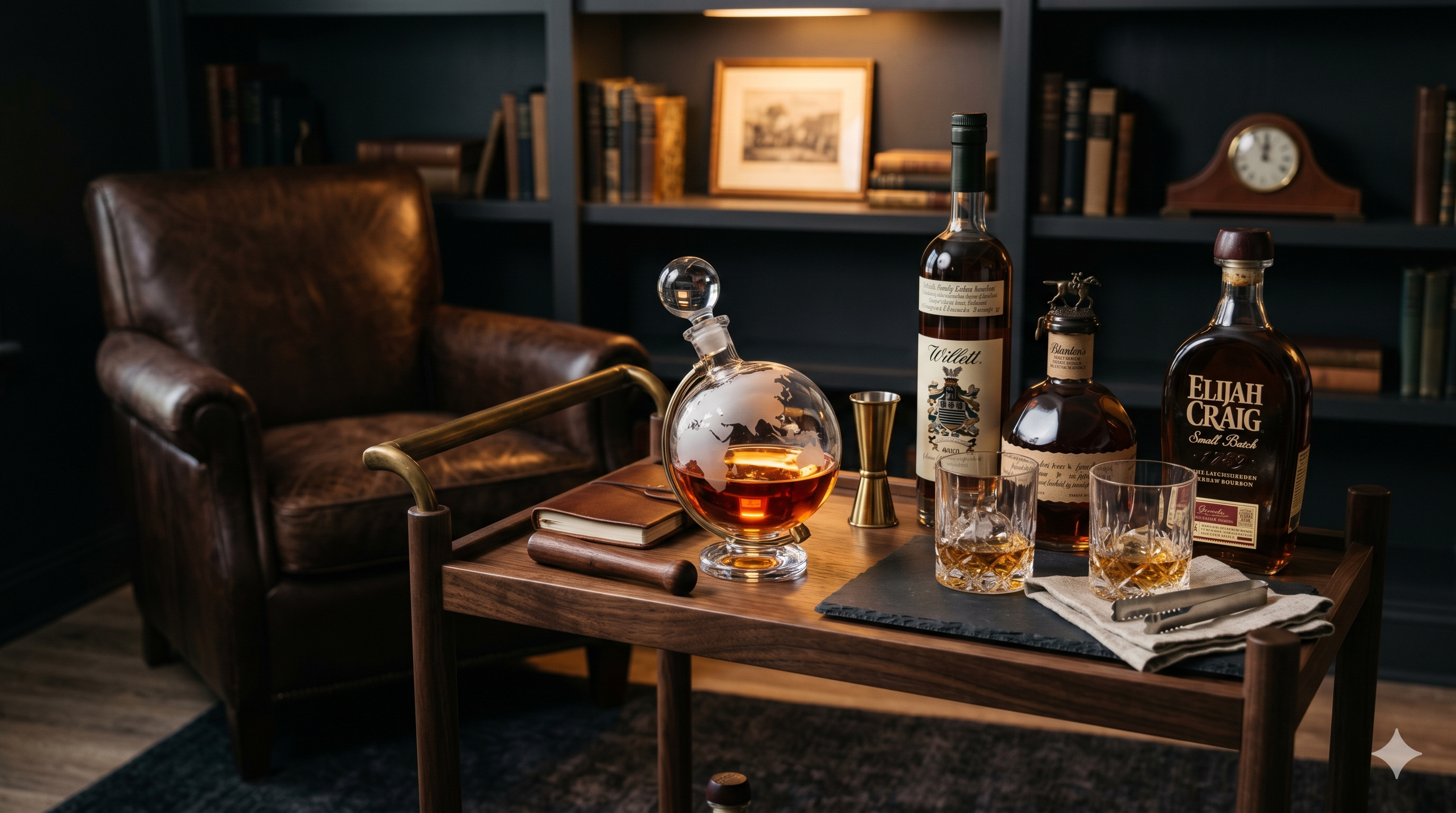
You spend decent money on bourbon. You pick bottles with care. Then you set them on a cart that looks like a grocery run, and somehow the whole thing feels less than the sum of its parts.
That gap between "I have a bar cart" and "I have a bar cart that actually looks good" is not about spending more money. It is about editing, anchoring, and placing things with intent. Most bar carts fail because everything on them is fighting for attention at the same volume.
How to Set Up a Home Bar Cart
Setting up a home bar cart that looks genuinely good comes down to six decisions: the right cart size, a purposeful bottle edit, a lead-free crystal decanter as the visual anchor, matching glassware, a tray to contain the arrangement, and one or two small accessories that add character without clutter.
Here is what this guide covers:
- Cart size and placement: How to pick a cart that fits your space without looking cramped or empty.
- The bottle edit: Which bottles to display and which to store out of sight.
- The decanter as centerpiece: Why a heavy, lead-free crystal decanter is the single upgrade that changes how the whole cart reads.
- Glassware selection: The three glass types that cover every drink worth serving.
- Tray styling: How a tray turns a random collection into a composed arrangement.
- Accessories and finishing touches: The small details that signal intentional design rather than accumulation.
- Lighting: One easy step most people miss that makes a bar cart look three times better at night.
This guide covers every decision, in the right order, so your setup lands the way you intended.
1. Start With the Right Cart Size for Your Space
What it means: Your cart size should leave visible breathing room on every shelf, not just hold everything you own.
The most common mistake is buying the largest cart available and loading it from edge to edge. A bar cart should look curated, not stocked. If guests can see the back rail of the shelf, the arrangement reads as intentional. If every inch is covered, it reads as storage.
A two-tier cart works for most living rooms and home offices. The top tier holds your active display: decanter, two to four glasses, a small tray. The lower tier holds the things you need but do not want to see: backup bottles, a mixing tool, your ice cube tray. If your space is larger, a three-tier cart gives you room to introduce a small plant, a candle, or a book. But only if the cart earns the additional surface.
Check right now: Stand three feet from your current or planned cart location. Whatever you would notice first is what your guests will notice first. That spot belongs to your most visually interesting piece, which is almost always the decanter.
2. Edit Your Bottles Down to Three or Four
What it means: Display fewer bottles than you own. Display only the ones that look good together.

Most whiskey drinkers have more bottles than they should show. Five mismatched labels in different heights create visual noise. Three bottles with complementary profiles — one tall, one mid, one squat — create rhythm. Edit down to what you would actually serve a guest tonight, and put the rest in a cabinet.
Label direction matters more than people realize. Turn labels slightly toward the viewer at a 10-degree angle rather than dead straight. It adds a sense of life to the arrangement without looking staged. If you have a bottle with particularly strong label design, give it the anchor position at the back of the display.
For a whiskey-focused cart, one spot in your bottle edit should always be held by a lead-free crystal decanter. Not because decanters improve whiskey — they do not claim to — but because a heavy, well-made decanter sitting among commercial bottles is the visual contrast that makes the whole cart read as elevated rather than assembled.
Read our guide on what makes a good whiskey decanter before you buy one. The weight, the stopper seal, and the lead-free certification are the three things worth checking.
3. Choose a Decanter That Anchors the Whole Setup
What it means: A decanter is not just another vessel. It is the centerpiece that gives your bar cart a focal point.
Every well-composed bar cart has a visual anchor. It is the piece that stops the eye before it moves on. On a whiskey bar cart, that piece should be a decanter. Not because of what it holds, but because of what it signals: that someone made a deliberate choice, not just an accumulation.

The shape of your decanter determines the personality of your whole setup. A globe decanter reads as confident and bold, with a rounded base that pulls ambient light into the glass and creates a presence on the cart that a square bottle cannot match. Browse our globe decanter if that is the direction you are going. If your space leans toward modern and architectural, a twisted or geometric silhouette adds a sculptural quality. Our twisted decanter set is one of the most-viewed pieces we carry for exactly that reason.
Whatever shape you choose, two non-negotiables apply: the decanter must be 100% lead-free crystal, and the stopper must create a proper seal. A loose stopper or a light-feeling glass will undermine the whole composition regardless of how good the arrangement looks otherwise.
If you want to understand the full safety picture, our post on are whiskey decanters safe covers the lead-free question in plain detail.
For a full breakdown of shapes and which suits which aesthetic, read our whiskey decanter shapes guide.
4. Keep Glassware Minimal and Matching
What it means: Two to four glasses of the same style will always look better than six glasses of three different types.
Matching glassware is one of the fastest ways to make a bar cart look intentional rather than inherited. You do not need a full service for eight on display. Two rocks glasses and two highballs cover the vast majority of what you'll serve, and they occupy enough visual weight to balance the decanter without competing with it.
Stack or stagger, never crowd. If you have four rocks glasses, stack two and place two beside them. The variation in height adds movement to the arrangement. If you have a full set of matching glasses, display half and store the rest.
Crystal glasses with a bit of weight and clarity will always photograph better and feel better in the hand than thin-walled options. When guests pick up a heavy glass, the perception of quality transfers immediately to everything else on the cart.
5. Use a Tray to Create Structure
What it means: A tray turns a collection of individual pieces into a composed group.
This is the single most underused technique in home bar styling. A tray does for a bar cart what a frame does for a painting: it tells the eye where the arrangement starts and where it ends. Without it, pieces feel like they were placed by chance. With it, the same pieces feel considered.
A rectangular slate or dark wood tray on your top tier creates a natural zone for your decanter, glasses, and one or two small accessories. Keep the tray to the rear-center of the shelf, not pushed all the way to the back. That gap between the tray and the front edge of the shelf gives the arrangement room to breathe.
Round trays work well if your cart has circular or softer lines. Square marble trays read as more formal and suit darker, more dramatic setups. The material matters less than whether the tray's tone matches the overall palette of the cart.
6. Add Two Accessories, Not Ten
What it means: One or two well-chosen accessories add character. More than that adds clutter.
Bar cart accessories fall into two categories: functional and decorative. The best ones are both. A set of large ice cube trays kept on the lower shelf is a functional accessory that also communicates intention. Oversized ice cubes chill drinks more slowly, which matters with good whiskey, and they look considerably better in a glass than standard cubes.
Our large ice cube trays are specifically designed for whiskey glasses and decanter sets.
For decorative accessories, a small whiskey stone dish, a leather coaster set, or a single low candle can add texture without demanding attention. The rule is simple: if you have to move an accessory to use the cart comfortably, it should not be on the cart.
Avoid cocktail smoker kits as a bar cart display item unless you are actively using them. They photograph well but take up significant space and the wood chips and torch create a visual busyness that competes with the clean lines of a whiskey-focused cart.
7. Light Your Bar Cart
What it means: Ambient or accent lighting turns a good bar cart into one that stops conversations.
Most people set up a bar cart and then light the room, not the cart. One small LED puck light under the upper shelf, or a clip-on spot directed toward the decanter, changes the entire atmosphere. Amber glass picks up warm light in a way that makes the whiskey itself look like something worth noticing.
If you have a globe decanter sitting in even modest warm light, the refraction through the glass creates a visual effect you cannot replicate with anything else on the cart.
This is the detail most people skip and then wonder why their cart never looks as good in person as it does in photos they have seen.
Position the light source above and slightly behind the decanter, not in front of it. Front lighting flattens. Backlighting or side lighting from above creates depth.
Putting It Together
A bar cart that looks genuinely good is not about filling every surface. It is about choosing a focal point, editing everything else to support it, and adding only the details that earn their place.
Start with your cart size and placement. Edit your bottles to three or four. Place a well-made, lead-free crystal decanter as the visual anchor. Match your glassware and keep only what you would use tonight. Contain the arrangement with a tray. Add two accessories maximum. Then light it.
That sequence works in every space, at every budget above entry level. Browse our full range of premium whiskey decanter sets to find the piece that makes your cart look the way you intended it to.
Frequently Asked Questions
What should I put on a home bar cart?
A well-set home bar cart needs five things: three to four curated spirit bottles, a crystal decanter as the focal point, two to four matching glasses, a tray to anchor the arrangement, and one or two functional accessories such as a coaster set or ice cube tray. Avoid filling every inch of available surface. Negative space makes a bar cart look intentional rather than cluttered, and the pieces you do display will read better for it.
How do I make my bar cart look more expensive?
The fastest way to make a home bar cart look more expensive is to replace any lightweight or mismatched glassware with a matching set, and to add a heavy lead-free crystal decanter as the central piece. Weight is the quality signal that guests register first, whether in the glass or the decanter. Matching pieces at a mid price point will consistently read as more premium than an expensive piece surrounded by mismatched items.
How many bottles should be on a bar cart?
Three to four bottles is the right number for most home bar carts. This is enough variety to serve most preferences while leaving visual breathing room in the arrangement. If you own more bottles than that, store the rest in a cabinet and rotate them onto the cart based on what you are currently serving or gifting. More than five bottles on a standard two-tier cart almost always reads as overcrowded rather than well-stocked.
Does a whiskey decanter actually improve the look of a bar cart?
Yes. A decanter improves the look of a bar cart because it introduces a visual contrast that commercial bottles cannot provide. A heavy crystal decanter, particularly a globe or geometric shape, catches ambient light and creates a focal point that stops the eye. The amber color of whiskey inside clear crystal also reads differently than the same whiskey in an opaque or heavily labeled bottle. The decanter does not need to contain anything rare to have this effect.
What is the best decanter shape for a modern bar cart?
For a modern or architectural home bar aesthetic, a twisted or geometric decanter shape tends to work best because the clean lines and angular profile complement contemporary interiors without looking decorative in a traditional sense. For a darker, more classic or leather-and-wood aesthetic, a globe decanter has the visual weight and rounded presence that suits those environments. Both styles are available in our whiskey decanter shapes guide with detailed comparisons.
What is the difference between a cheap and a premium whiskey decanter for display?
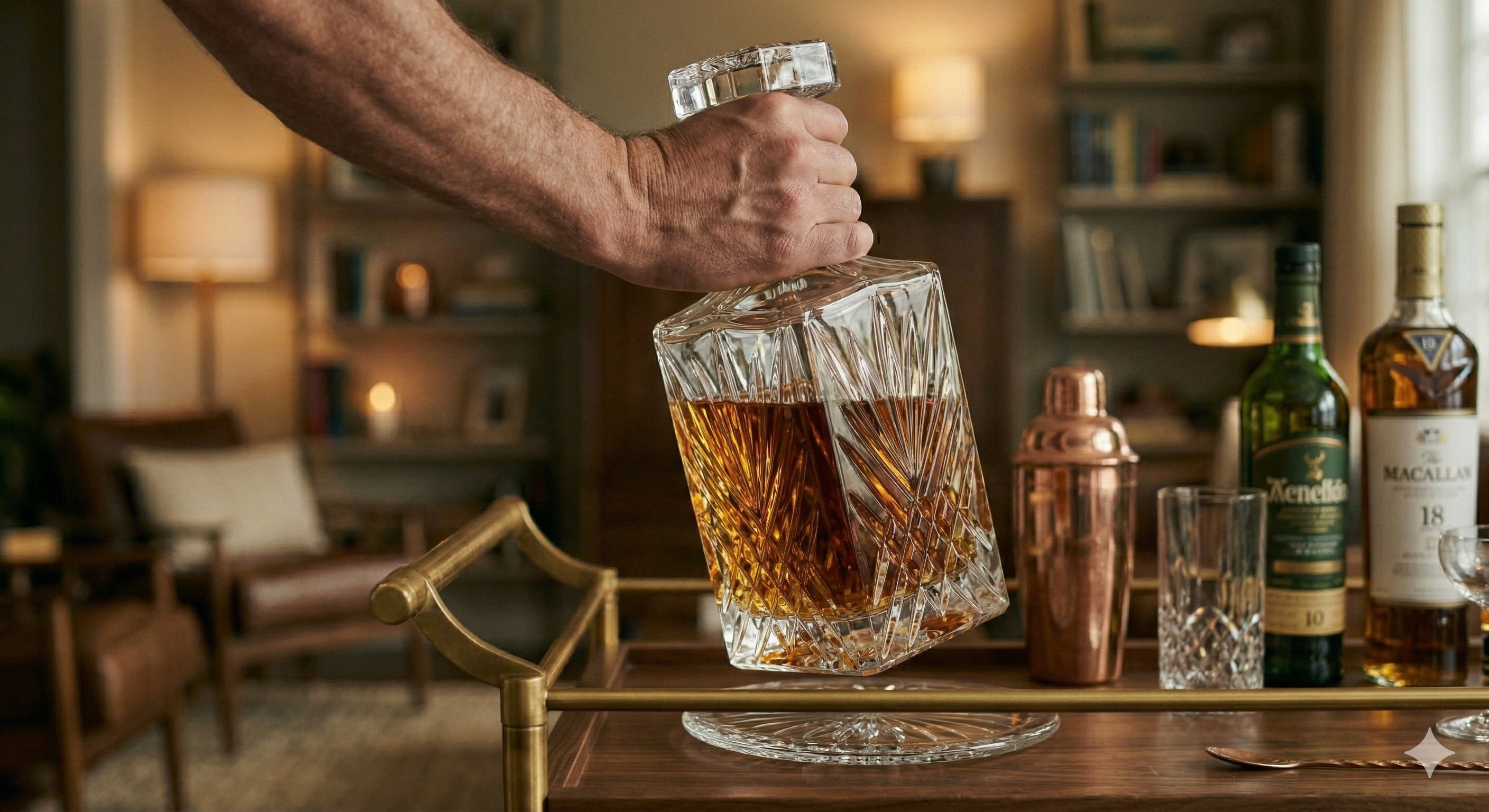
The difference between a cheap and a premium whiskey decanter comes down to three things: glass weight, stopper seal quality, and lead-free certification. Cheap decanters are made from thin glass that feels insubstantial when lifted and offers little visual presence on a bar cart. Premium decanters use thick lead-free crystal that has genuine heft, creates better light refraction, and includes a properly fitted stopper that seals without leaking. For display purposes, the weight difference alone is immediately apparent to anyone who picks it up.
SHOP HYDRO GIZMOS DECANTER SETS
Your bar cart deserves a proper centerpiece.
We have spent years in the premium barware space and one thing is consistent: the right decanter changes everything about how a setup reads. Not because it stores whiskey differently, but because it tells every guest in the room that whoever set this bar actually cared.
Every Hydro Gizmos decanter set is 100% lead-free crystal, weighted for presence, fitted with a precision stopper, and packaged to arrive intact. Ready to display from the moment it arrives.
You will walk away with:
- A decanter built for display and daily use, not just looks
- A lead-free crystal set that handles questions about safety before they are asked
- Gift-ready packaging that requires no additional wrapping
- A set that scales from personal use to gifting without losing its quality read
Browse All Decanter Sets at Hydro Gizmos
Not ready to shop yet? Read more on the Hydro Gizmos whiskey blog for guides on decanter care, whiskey gifting, and bar styling.
Trusted by thousands of whiskey enthusiasts and gift-givers across North America. Where Legends Unwind.

Share:
Cheap vs Premium Whiskey Decanter: How to Tell the Difference
The Best Whiskey Decanter Sets in 2026 — and the Ones That Will Let You Down