
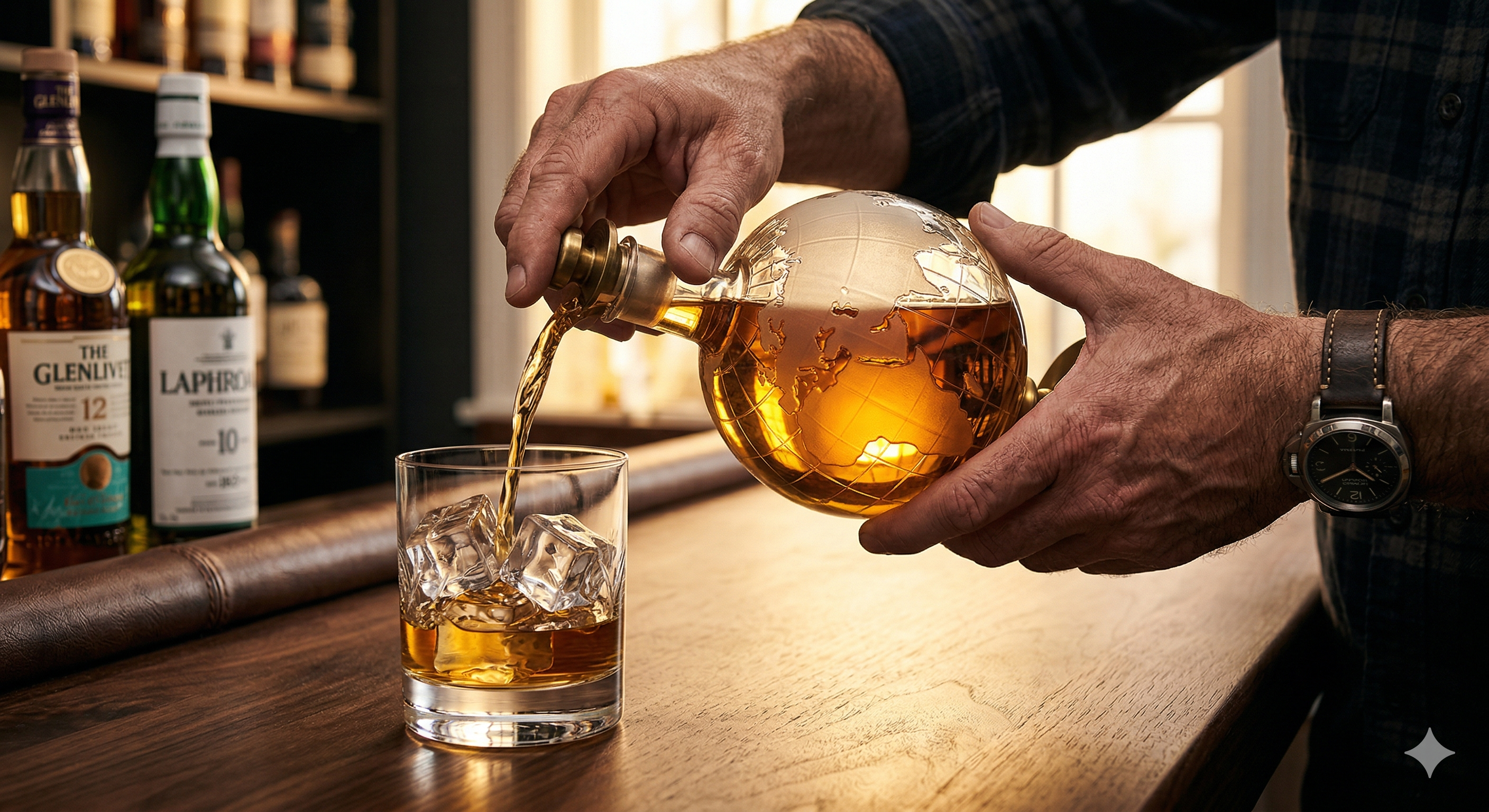
Most people spill the first time they pour from a globe decanter. Not because the glass is flawed. Because nobody tells you what to expect.
The globe decanter commands attention, looks expensive, and photographs beautifully.
But ask anyone who has owned one for more than a week, and they will tell you the same thing: pouring from it takes a little practice.
The curved base, the wide body, and the narrow neck all work together to create a vessel built for display as much as function. That is not a flaw. It is by design. But it does mean that how you pour matters.
These tips will help you get a clean, controlled pour every time.
What Makes a Globe Decanter Harder to Pour?
Standard decanters have flat bases and straight necks. You tip them forward and gravity does the work predictably. A globe decanter is different.
The rounded bottom means there is no natural resting angle as you tilt it. The liquid inside shifts all at once rather than gradually, which creates a sudden surge effect if you pour too fast. The wide body also means more surface area is in motion during the pour.
-
The center of gravity shifts quickly
Because the glass is widest at the midpoint, the liquid redistributes suddenly as you approach a 45-degree tilt. This is the moment most spills happen. Knowing it is coming lets you slow down at exactly the right point.
-
Neck width controls flow speed
A narrower neck slows the pour and gives you more control. A wider neck means you need to compensate with a slower tilt and a steadier grip. Check your specific decanter's neck opening before pouring for guests so you know what to expect.
How to Hold a Globe Decanter for a Clean Pour?
Grip matters more with a globe decanter than with any other shape.

-
Use two hands for larger fills
If your decanter is more than half full, use your dominant hand on the neck and your non-dominant hand cradling the base. This gives you control at both the tipping point and the flow point. One-handed pours with a full globe decanter are where most accidents happen.
-
Handle the stopper before you pour
A tight-fitting stopper is one of the most reliable quality signals in any decanter. Remove it fully before pouring and set it on a dry cloth rather than the bar surface to avoid residue. When reseating it after the pour, a light press should create a snug, airtight seal with no wobble. Never try to pour with the stopper partially in place.
-
Pour over the glass, not toward it
Position the glass directly beneath the neck opening before you begin tilting. Reaching across with the decanter mid-pour is an easy way to lose control of the angle.
Globe Decanter Pouring Technique: Speed and Angle
Most spills happen because people tilt too fast. A globe decanter rewards patience.
-
Start slow, then steady
Begin your tilt gradually. In the first two seconds, you want the whiskey just beginning to move toward the neck. Once the liquid is flowing in a steady stream, maintain that angle without adjusting.
-
The 45-degree rule
You will rarely need to go past a 45-degree tilt with a globe decanter. At that angle, the liquid flows freely enough for a clean pour into most standard glasses. Going further increases the risk of an uncontrolled surge, especially when the decanter is more than three-quarters full.
-
Pause before pulling back
Once you have poured your measure, return the decanter to upright slowly. Pulling back quickly can cause a final drip from the neck. A slow, controlled return to vertical gives any remaining liquid at the neck edge time to flow back inside.
Choosing the Right Glass Makes a Difference
The glass you pour into affects how controlled the experience feels.
A wide-mouth rocks glass or whiskey tumbler is the most forgiving target because the opening is broad and easy to hit. Pouring into a narrower glass like a Glencairn requires a more precise angle and a slower pour speed. If you are hosting and want the pour to look effortless, always use glasses with a wide enough opening to give yourself some margin.
A lead-free whiskey decanter set with matched glasses makes this much easier. The glass and decanter are designed to work together, which removes a lot of the guesswork. If you are also shopping for a new set, lead-free crystal is the only material worth displaying or pouring from daily.
Cleaning the Neck After Pouring
Even with perfect technique, a small drip at the neck is normal. Keep a clean bar cloth nearby and lightly touch the neck opening after each pour. This keeps the decanter looking sharp on the bar cart between uses and prevents residue from building up around the stopper seal.

For deeper cleaning, our guide on how to clean a whiskey decanter covers everything you need to keep the glass clear and the stopper sealing properly.
The Pour Becomes Part of the Ritual
Here is the truth: the first few pours from a globe decanter feel unfamiliar. After a few uses, it becomes second nature. The weight of the glass, the feel of the tilt, and the sound of the pour settle into something comfortable and deliberate.
That is part of what makes a well-made globe decanter worth owning. The pour is not just functional. It becomes part of the ritual of hosting, of settling in for the evening, of presenting a drink with quiet confidence.
If you are buying a globe decanter as a gift, that pour is part of what makes it worth giving. A well-made set with a snug stopper and substantial glass will feel intuitive from the first use. That is exactly the confidence a gift-giver wants to deliver.
If you are still deciding on the right set, our globe decanter collection is built with thick lead-free glass, snug stoppers, and the kind of weight that makes every pour feel intentional. Exactly what your bar cart deserves.
FAQ
How do you pour from a globe decanter without spilling?
Use two hands when the decanter is more than half full, tilt slowly to avoid a liquid surge, and position the glass directly under the neck before you begin. A steady tilt at no more than 45 degrees gives you the most control.
Why does my globe decanter drip when I pour?
Most drips happen when the decanter is returned to upright too quickly. Slow down your return motion and lightly touch the neck with a bar cloth after each pour to keep things clean.
Is a globe decanter practical or just decorative?
Both. A quality globe decanter looks exceptional on any bar cart and handles everyday pours well. Once you know the grip and angle, which this guide covers, the pour becomes second nature.
What type of glass works best with a globe decanter?
A wide-mouth rocks glass or whiskey tumbler is the easiest to pour into accurately. Narrower glasses work fine once you are comfortable with the decanter's weight and flow rate.

Share:
Whiskey Gifts for Dad That He'll Actually Use
Are Whiskey Decanters Safe? Lead Crystal vs. Lead-Free Explained